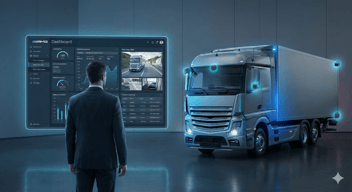
Key Takeaways: Maximizing ROI Through Sustainable Operations
Navigating the energy transition can feel complex, but optimizing your vehicles is a strategic necessity to reduce your overall operational costs.
- Lowering your Total Cost of Ownership (TCO) is highly achievable by reducing volatile fuel dependency and minimizing routine vehicle maintenance downtime.
- Deploying advanced fleet telematics allows you to instantly cut carbon emissions through dynamic route optimization and structured eco-driving programs.
- Building a greener fleet ensures your immediate compliance with strict urban emission regulations, effectively shielding your business from costly daily penalties.
- Adopting a phased electrification strategy, starting with predictable, high-yield urban routes, minimizes operational disruption and protects your critical capital expenditure.
Dive into our comprehensive guide below to discover the exact steps and technologies needed to seamlessly future-proof your business operations.
Why is Transitioning to a Greener Fleet Crucial for Your TCO?
A sustainable fleet directly reduces Total Cost of Ownership (TCO) by lowering fuel consumption, decreasing maintenance expenses through fewer moving parts in EVs, and avoiding carbon taxes or low-emission zone penalties. This strategic shift ensures long-term profitability while meeting strict corporate sustainability goals.
The concept of Total Cost of Ownership is the cornerstone of any successful fleet management strategy. Historically, fleet greening was viewed as a costly endeavor driven purely by CSR (Corporate Social Responsibility) requirements. Today, the financial data tells a completely different story.
When we evaluate the lifecycle costs of traditional Internal Combustion Engine (ICE) vehicles against alternative fuel or electric vehicles, the ROI becomes undeniable. The savings manifest in several crucial areas:
- Energy Cost Volatility: Electricity and alternative fuels often provide a more stable and predictable cost-per-mile than diesel or petrol, protecting your operational budget from global oil market fluctuations.
- Maintenance and Downtime: EVs possess significantly fewer moving mechanical parts. This translates directly into reduced wear and tear, eliminating the need for oil changes, exhaust repairs, and frequent brake replacements (thanks to regenerative braking). Less time in the workshop means higher vehicle availability.
- Regulatory Compliance and Taxation: With the introduction of stricter emission standards across global cities, non-compliant vehicles face steep daily charges. Transitioning your fleet mitigates these penalties and often unlocks favorable benefit-in-kind tax rates and government acquisition grants.
To clearly illustrate the financial advantages, consider the following comparative breakdown:
| Cost Factor | Traditional ICE Fleet | Green / EV Fleet Operations | Impact on Overall TCO |
| Fuel / Energy | High vulnerability to price spikes. | Stable, lower cost-per-mile via smart charging. | Significant Reduction |
| Maintenance | Frequent servicing, high parts replacement. | Minimal fluid changes, extended brake life. | Moderate Reduction |
| Taxes & Tolls | Subject to carbon taxes and LEZ charges. | Often exempt from emission zone fees. | Immediate Savings |
| Asset Depreciation | Rapidly declining residual value for diesel. | Growing secondary market demand for EVs. | Long-term Value Retention |
By viewing your fleet through the lens of TCO rather than just initial acquisition costs, the financial argument for decarbonization becomes not just viable, but highly compelling.
How Can Telematics Accelerate Your Greener Fleet Strategy?
Telematics accelerates green transition by providing real-time data on driver behaviour, fuel usage, and route efficiency. By monitoring harsh braking, excessive idling, and optimal charging times, fleet managers can implement targeted eco-driving programs that instantly reduce carbon emissions and operational costs.
You do not need an entirely electric fleet to run a green fleet. For many businesses—particularly those relying on Heavy Goods Vehicles (HGVs) where EV infrastructure is still maturing—optimizing the current ICE lineup is the vital first step. This is where advanced telematics and fleet management software become your most valuable assets.
By integrating smart connectivity into your daily operations, we can help you unlock hidden efficiencies. Telematics transforms raw data into actionable intelligence, enabling you to address the most common pain points of fleet management:
- Driver Behaviour and Eco-Driving: Even the most fuel-efficient vehicle will perform poorly in the hands of an aggressive driver. Telematics monitors speed, RPM, harsh acceleration, and abrupt braking. By gamifying driver scores and offering targeted training, you can reduce fuel consumption by up to 15% almost instantly.
- Eradicating Engine Idling: Engine idling is a silent budget killer. Fleet management software highlights exactly where and when vehicles are left running while stationary, allowing you to implement strict anti-idling policies that save thousands in wasted fuel and unnecessary emissions.
- Dynamic Route Optimization: Shorter, faster, and smarter routes naturally equate to fewer emissions. Intelligent routing algorithms take into account real-time traffic, delivery windows, and vehicle size restrictions to ensure your drivers are taking the most efficient path possible.
- EV Suitability Assessments: Telematics platforms analyze your current ICE vehicle trip data—daily mileage, dwell times, and payload—to identify exactly which routes and vehicles are prime candidates for immediate EV replacement without disrupting operations.
By relying on precise data, you eliminate the guesswork from your sustainability strategy, ensuring every operational adjustment delivers maximum ROI.

What Are the Key Steps to Successfully Build a Greener Fleet?
Successfully greening your fleet requires a structured approach: assessing current vehicle utilization, introducing alternative fuel vehicles or EVs where viable, deploying advanced fleet management software, and continuously training drivers. Phased implementation minimizes disruption and maximizes the return on investment.
Transitioning your assets requires a pragmatic, step-by-step methodology. Rushing into wholesale electrification without a solid foundation often leads to operational bottlenecks and inflated costs. We recommend a phased approach, tailored to your unique business requirements:
- Conduct a Comprehensive Fleet Audit: Before making any changes, establish a baseline. Analyze your current TCO, fuel expenditures, and carbon footprint. Understand the daily operational demands of each vehicle class, from light commercial vans to heavy-duty trucks.
- Optimize Existing Assets First: Implement eco-driving training and telematics solutions to maximize the efficiency of your current ICE vehicles. This provides immediate cost savings that can be reinvested into your future transition.
- Plan Your Charging Infrastructure: If transitioning to EVs, infrastructure is your biggest hurdle. Assess your depot's grid capacity early. Decide whether you will rely on workplace charging, public networks, or home-charging solutions for your drivers, and factor these into your capital expenditure.
- Adopt a Phased Vehicle Replacement: Do not replace your entire fleet overnight. Begin with a pilot program—swap out the vehicles that run short, predictable urban routes first. Use the data gathered from this pilot to refine your strategy before scaling up.
- Monitor, Review, and Iterate: Fleet optimization is a continuous process. Use your management software to track the performance of new green vehicles against your historical ICE baseline. Adjust routing, charging schedules, and driver training as needed to continuously improve efficiency.
Your Partner in Sustainable Fleet Management
Navigating the transition from traditional internal combustion to optimized, low-emission operations requires expertise, precise data, and the right technological tools. By prioritizing Total Cost of Ownership, leveraging real-time telematics, and empowering your drivers through eco-driving initiatives, sustainable operations become a highly profitable reality.
We are committed to helping you overcome the daily administrative and logistical challenges of modern fleet management. Contact our expert team today to explore our advanced telematics tools and seamlessly transition to a sustainable, greener fleet.
Frequently Asked Questions (FAQ)
1. How much does it cost to transition to a green fleet?
The initial cost varies depending on the size and type of your fleet (LCVs vs. HGVs) and your charging infrastructure needs. While the upfront acquisition cost of EVs is generally higher than traditional vehicles, the Total Cost of Ownership (TCO) is often lower due to significant savings on fuel, maintenance, and tax incentives. A phased transition strategy helps manage capital expenditure effectively.
2. Can I make my current fleet greener without buying new electric vehicles?
Yes, absolutely. You can significantly reduce your carbon footprint and fuel costs by optimizing your current internal combustion engine (ICE) vehicles. Utilizing telematics for dynamic route optimization, enforcing anti-idling policies, ensuring proper tire pressure, and implementing driver training programs (eco-driving) can reduce emissions by up to 15-20% without purchasing a single new vehicle.
3. What role does "eco-driving" play in fleet sustainability?
Eco-driving is paramount. It involves training drivers to anticipate traffic flow, accelerate smoothly, maintain steady speeds, and avoid harsh braking. Advanced fleet management software monitors these metrics and provides drivers with real-time feedback. Better driving habits not only reduce fuel consumption and emissions but also drastically lower accident rates and vehicle wear and tear.
4. How do I know which vehicles to electrify first?
The best approach is to conduct an EV suitability assessment using your current telematics data. Look for ICE vehicles that operate on predictable, shorter daily routes (well within the range of an EV), have regular return-to-base schedules, and enjoy sufficient dwell time for recharging. Light commercial vehicles operating in urban environments are typically the best candidates for initial electrification.